
What Fall Arrest Really Means in Work at Height Safety
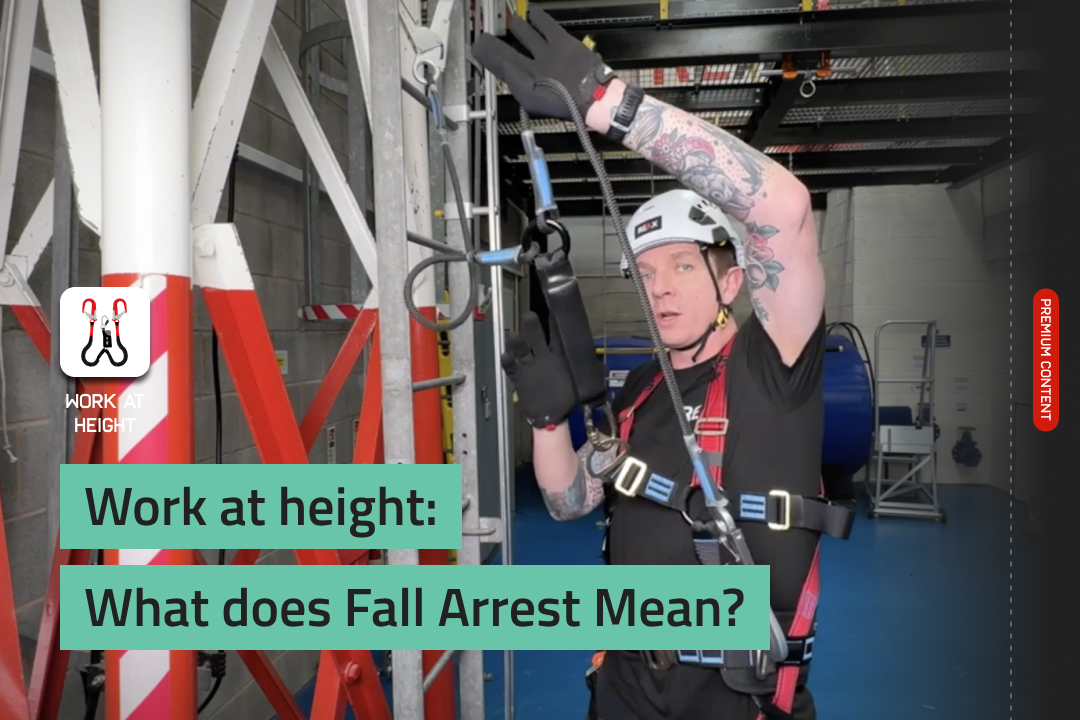

Fall arrest systems don’t stop you falling they stop you dying from the impact.
The real danger in a fall is the sudden stop and the trauma that follows when the body’s organs catch up.
We break down what fall arrest really means, how it protects you, and the key behaviours that determine whether your system works or fails.
Watch the full video:
A proper fall arrest system:
- Reduces impact force below 6 kN,
- Absorbs energy gradually
- Protects the body from catastrophic trauma.
Whether you’re using lanyards, blocks, or inertia reels, the entire purpose is the same:
Slow the stop, reduce the force, and give the user a survivable deceleration.
Without proper setup and technique, the system simply can’t do its job and impact trauma remains the critical risk.
Practical Steps / Key Takeaways
Don’t bypass the shock absorber:
Never clip both lanyards back into yourself. Always attach each leg to separate anchor points.
Keep anchor points as high as possible:
Higher attachment = lower fall factor = safer outcome.
Maintain two points of contact:
Never rely on a single connection when climbing or transitioning.
Check function before use:
Ensure tags are valid, lanyards deploy correctly, inertia reels lock as intended.
Understand fall factor:
Aim for fall factor zero wherever possible by keeping yourself below the anchor point.
Ascend and descend safely:
Move one lanyard at a time, keeping one secured high while repositioning the other.
We emphasise that fall arrest isn’t just a piece of equipment it’s a system backed by understanding, behaviour, and ongoing assessment. Our training focuses on real-world decision-making: choosing correct anchor points, managing fall factors, checking equipment, and avoiding the subtle mistakes that bypass shock absorption or compromise redundancy.
The goal isn’t simply compliance it’s giving workers the competence and confidence to operate safely at height every day.
Need help improving your work-at-height safety?
Our training and consultancy services help teams understand fall protection systems, plan safe work, and operate confidently at height.
Explore Work at Height Training ↗︎


Looking after your kit
Even the best kit needs regular inspection and servicing. we have a team of fully trained PPE inspectors who can take the worry out of the process. Our servicing team are fully certified to carry out the servicing requirements for many of the leading rescue devices currently on the market.



Unit 4 Keystone Court, Hallam Way,
Whitehills Business Park,
Blackpool,
FY4 5NZ
Company Number: 09204984
VAT No: 199729531
01253767775 Opt 1
info@reaxltd.com
Unit 1 & 2 Keystone Court, Hallam Way,
Whitehills Business Park,
Blackpool,
FY4 5NZ
Company Number: 11576372
VAT No: 307530624
01253767775 Opt 2
equipment@reaxltd.com