
Fall Factors Explained | Work at Height Safety
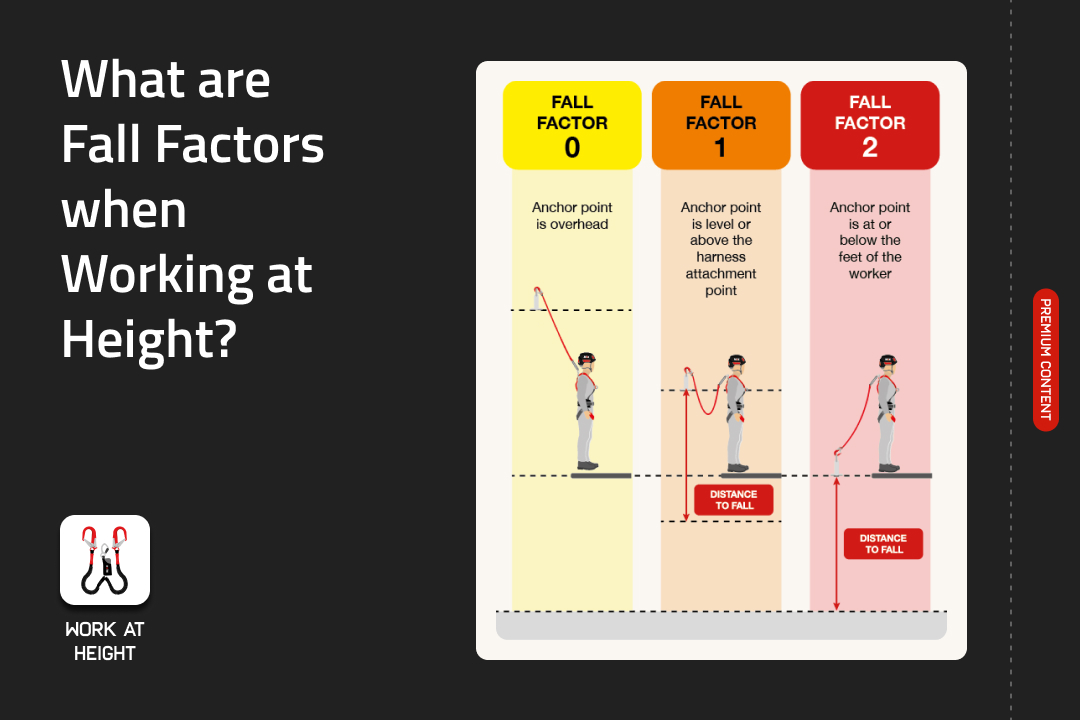

Working at height comes with real risks and understanding fall factors can make all the difference.
Fall factors relate to the positioning of your attachment points and how much distance you could travel in a fall. Poor positioning increases risk, while correct attachment can drastically reduce potential fall distance and injury severity.
Failing to consider fall factors can lead to serious injuries or worse. Proper planning, correct anchorage, and awareness of your environment are essential.
In this video, Andy from REAX explains the core principles and practical tips for reducing fall distance and improving safety.
Watch the full video:
Practical Steps / Key Takeaways
- Always aim for the highest possible attachment point to minimise fall distance.
- Understand the concept of fall factors: 0, 1, 2 and which situations are safe.
- Review your positioning and line setup before starting work.
- If a factor 2 situation is unavoidable, reassess the system and plan for additional safeguards.
- Incorporate fall factor awareness into training and daily work practices.
Expert Insight or REAX Perspective
We teach teams not just to comply with safety standards, but to understand the “why” behind them. Our work at height courses integrate practical fall factor exercises, rescue planning, and realistic simulations to ensure teams can operate safely under real conditions.
Need help with your work at height safety?
Our training and consultancy services can help your team plan, prepare, and operate safely at height.
Explore Work at Height Training ↗︎
Explore Work at Height Consultancy and planning ↗︎


Looking after your kit
Even the best kit needs regular inspection and servicing. we have a team of fully trained PPE inspectors who can take the worry out of the process. Our servicing team are fully certified to carry out the servicing requirements for many of the leading rescue devices currently on the market.



Unit 4 Keystone Court, Hallam Way,
Whitehills Business Park,
Blackpool,
FY4 5NZ
Company Number: 09204984
VAT No: 199729531
01253767775 Opt 1
info@reaxltd.com
Unit 1 & 2 Keystone Court, Hallam Way,
Whitehills Business Park,
Blackpool,
FY4 5NZ
Company Number: 11576372
VAT No: 307530624
01253767775 Opt 2
equipment@reaxltd.com