
REAX June 2026 Update: Training, Safety & Innovation
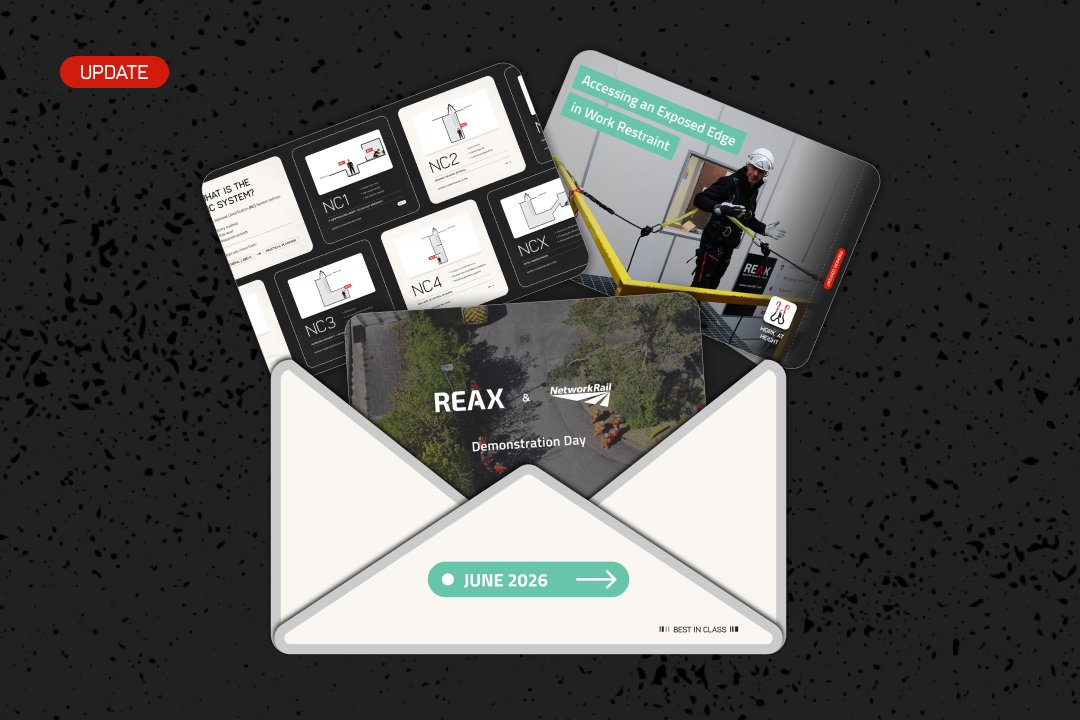
REAX June 2026 Update: Training, Safety & Innovation
June has been another busy month at REAX, with new training resources, practical guidance, and the release of our Network Rail Power Ascender Demonstration Day video.
Throughout the month we’ve continued our goal of sharing practical knowledge that helps organisations improve safety, develop competence and make better operational decisions when working at height, in confined spaces and during rescue operations.
From showcasing how power ascenders can support real-world rail operations, to explaining confined space classifications and work restraint systems, June’s content has focused on helping teams understand not just what to do, but why it matters.
Here’s a look back at everything we shared during June.
Network Rail Power Ascender Demonstration Day Video
One of the highlights of June was the release of our video showcasing the recent Skylotec Power Ascender demonstration delivered with Network Rail teams at Grateley Station.
Although the demonstration itself took place in May, June allowed us to share the results with a wider audience.
The day wasn’t simply about demonstrating equipment.
It was about understanding how powered ascenders could genuinely support different teams across the rail industry.
Using both the Skylotec ICX and Skylotec ACX, attendees explored how powered ascenders could assist with:
- Embankment access
- Bridges and viaducts
- Single Rope Technique (SRT)
- Difficult access locations
- Trackside operations
Rather than watching a presentation, everyone had the opportunity to climb, test the equipment and discuss real operational challenges with both Keith from the REAX team and Skylotec specialist Jamie.
Some participants intentionally pushed the equipment through demanding scenarios, navigating branches, changing positions and challenging the devices to better understand their capabilities.
Those conversations quickly evolved from curiosity into practical discussions around where these systems could improve efficiency, reduce fatigue and support safer access within their own operations.
The demonstration reinforced something we always believe:
Hands-on experience provides far more value than simply talking about equipment.
If you’d like to see the day in action, watch the demonstration video or read our full event write-up on the blog.
Understanding the NC System
Another topic we explored during June was confined space classification.
Many organisations are familiar with describing confined spaces as low, medium or high risk.
However, those labels only tell part of the story.
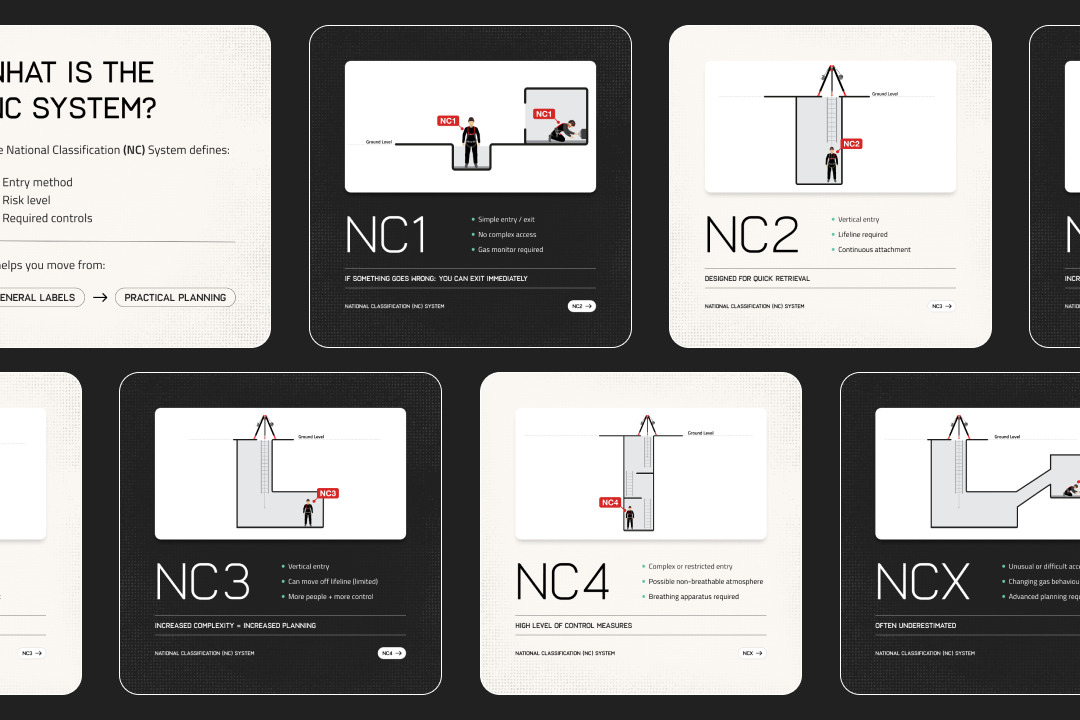
The NC System provides a more structured way of classifying confined spaces by considering factors such as:
- Entry methods
- Environmental hazards
- Rescue complexity
- Required control measures
Getting this classification right is incredibly important because it influences every decision that follows.
Equipment selection.
Training requirements.
Rescue planning.
Control measures.
If the initial classification is incorrect, those downstream decisions can also become inappropriate.
To help explain the process, we created a visual carousel breaking down each level of the NC System in a simple, practical format.
Work Restraint for Exposed Edges Explained
One of our latest blogs tackled another topic that regularly appears during training courses:
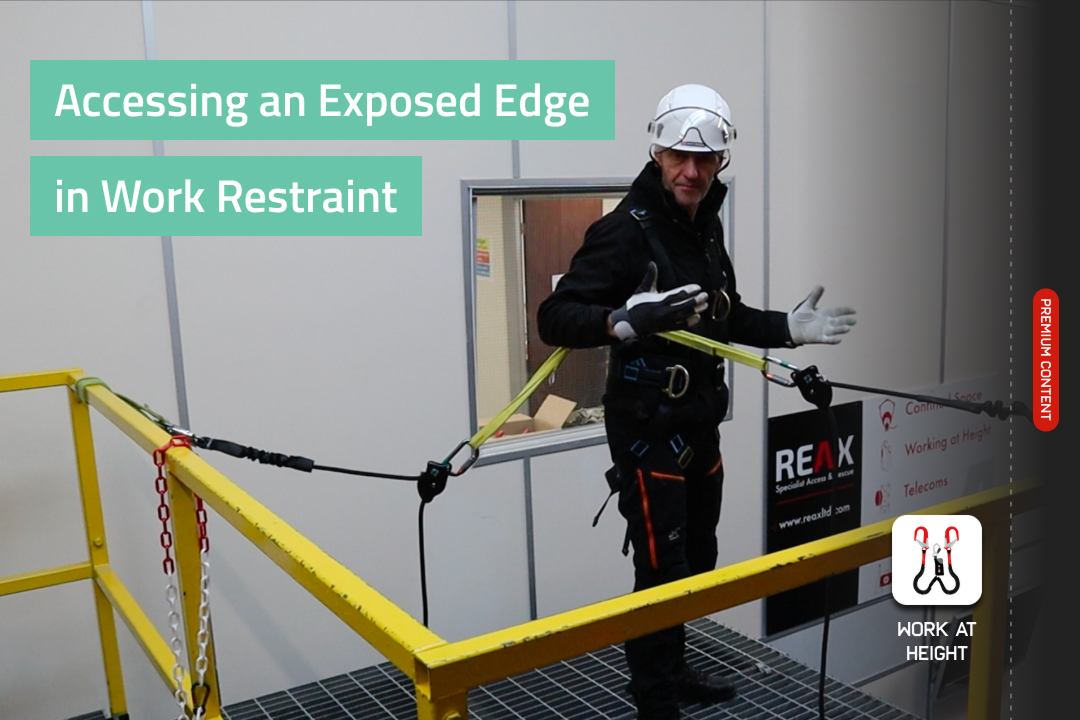
How do you safely use work restraint around multiple exposed edges?
Many people assume that installing one restraint system automatically prevents every fall risk.
In reality, complex environments often require a more considered approach.
When working around:
- Corners
- Roof edges
- Multiple exposed sides
- Open structures
A single restraint system may only protect against movement in one direction.
Our latest article explains how dual restraint systems can help maintain protection throughout changing work positions and why planning the system correctly is just as important as selecting the equipment itself.
The principle remains straightforward:
A correctly designed restraint system should prevent the user from ever reaching a position where a fall can occur.
Understanding that principle allows teams to make safer decisions before work even begins.
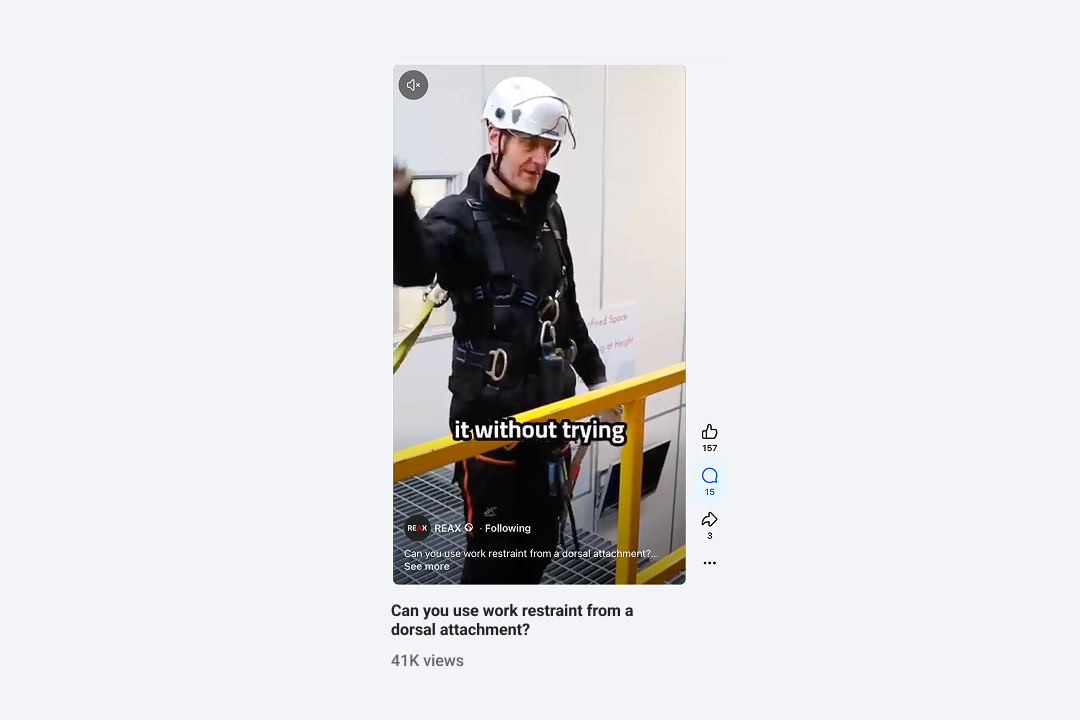
Trending Reel This Month – 41,000+ Views
Our short explaining whether work restraint can be used from a dorsal attachment exceeded 41,000 views, making it our most viewed piece of content during June.
Why We Share This Content
At REAX, training doesn’t begin and end in the classroom.
Our aim is to continuously share practical knowledge that helps people improve their understanding throughout the year.
Whether that’s through:
Every piece of content is designed to answer real questions that workers, supervisors and organisations face every day.
By regularly sharing practical guidance, we hope to support better decision making long after formal training has finished.
Stay Up to Date with REAX
Every month we share practical guidance, training insights, equipment demonstrations and industry updates designed to help organisations improve safety and competence.
If you’d like to keep up with everything happening at REAX, be sure to subscribe to our monthly updates.


Looking after your kit
Even the best kit needs regular inspection and servicing. we have a team of fully trained PPE inspectors who can take the worry out of the process. Our servicing team are fully certified to carry out the servicing requirements for many of the leading rescue devices currently on the market.


Unit 4 Keystone Court, Hallam Way,
Whitehills Business Park,
Blackpool,
FY4 5NZ
Company Number: 09204984
VAT No: 199729531
01253767775 Opt 1
info@reaxltd.com
Unit 1 & 2 Keystone Court, Hallam Way,
Whitehills Business Park,
Blackpool,
FY4 5NZ
Company Number: 11576372
VAT No: 307530624
01253767775 Opt 2
equipment@reaxltd.com