
Gas Monitor Basics for Confined Space Entry
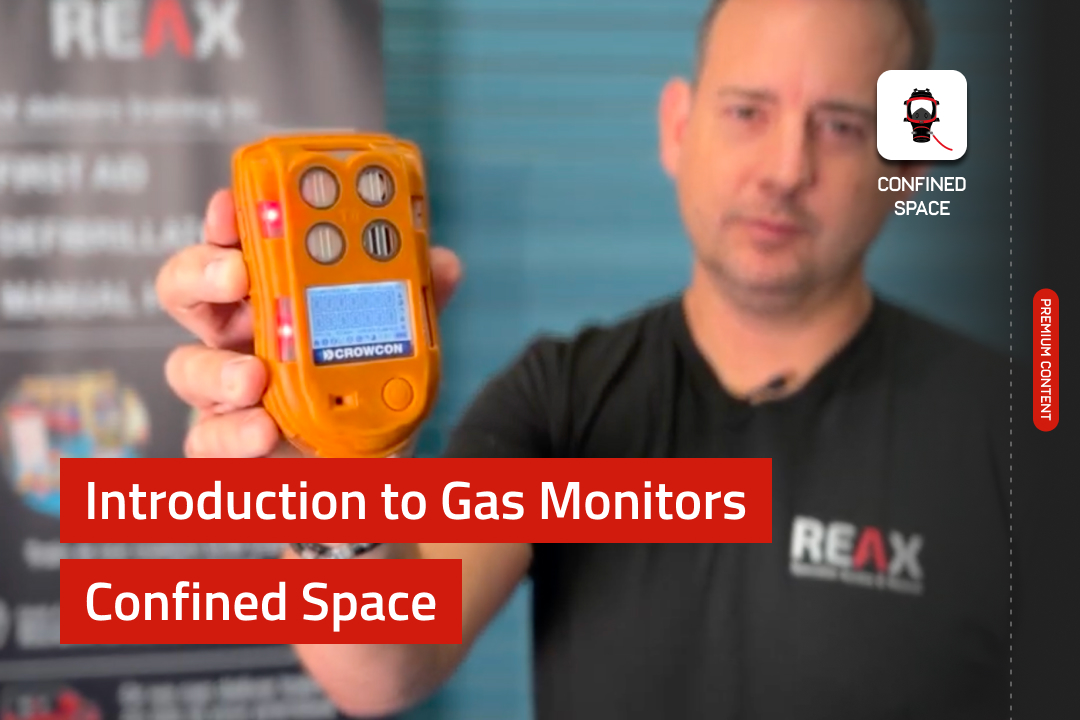
Gas monitoring is one of the most critical control measures in confined space work.
Before entry, teams rely on gas monitors to confirm whether an environment is safe but that only works if the device is understood and used correctly.
This guide breaks down the basics of a standard 4-gas monitor, what it measures, and how to interpret the readings.
🎥 Watch the full video: https://youtu.be/Cwn1k4dUE98
It tells you whether:
- The atmosphere is safe
- There are harmful gases present
- Oxygen levels are within a safe range
But the key is understanding what “normal” looks like.
In clean air, a typical 4-gas monitor should read:
- Oxygen: ~20.9%
- Hydrogen Sulfide: 0
- Carbon Monoxide: 0
- Flammable gases (LEL): 0
Anything outside of these values requires investigation and control.
Without that understanding, readings can be misinterpreted and risks missed.
Practical Steps / Key Takeaways
When using a gas monitor before confined space entry:
- Check the condition
Ensure filters are clean, correct, and not blocked - Confirm correct sensors
Make sure the monitor is set up for the gases relevant to your task - Power on correctly
Allow the monitor to complete its self-test - Look for confirmation indicators
Visual/audio signals and “OK” status show it’s ready to use - Check battery levels
Ensure sufficient charge for the duration of the task - Understand baseline readings
Know what safe, clean air readings should be - Use the menu correctly
Navigate and select functions as required
Gas monitors are widely used but not always fully understood.
We often see situations where:
- Devices are switched on but not checked
- Readings are visible but not interpreted
- Equipment is present but not used as a control
That creates a false sense of safety.
We focus on helping teams:
- Understand what their equipment is telling them
- Use it confidently in real-world conditions
- Integrate it properly into their risk assessments and procedures
Because a gas monitor only adds value if it’s used correctly.
Need help with your confined space safety?
Safety Consultancy & Rescue ↗︎


Looking after your kit
Even the best kit needs regular inspection and servicing. we have a team of fully trained PPE inspectors who can take the worry out of the process. Our servicing team are fully certified to carry out the servicing requirements for many of the leading rescue devices currently on the market.



Unit 4 Keystone Court, Hallam Way,
Whitehills Business Park,
Blackpool,
FY4 5NZ
Company Number: 09204984
VAT No: 199729531
01253767775 Opt 1
info@reaxltd.com
Unit 1 & 2 Keystone Court, Hallam Way,
Whitehills Business Park,
Blackpool,
FY4 5NZ
Company Number: 11576372
VAT No: 307530624
01253767775 Opt 2
equipment@reaxltd.com