
Emergency Procedures for Confined Spaces
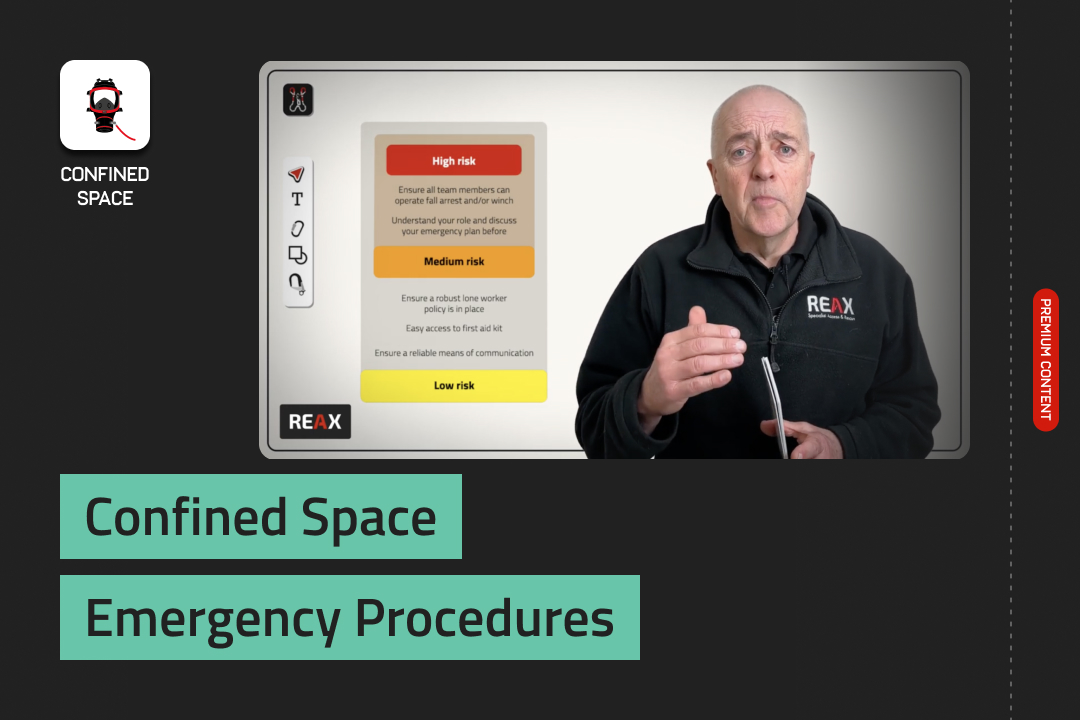

Emergency procedures are one of the most overlooked parts of confined space work — yet they’re the first thing that matter when something goes wrong. Before anyone enters the space, the team must know the plan, the equipment, the roles, and the rescue options.
Watch the full video:
Emergency procedures need to be established before work starts, not during an incident. The level of planning depends on whether the entry is low, medium, or high risk, but the principle stays the same: if something goes wrong, the response must be immediate, coordinated, and understood by everyone involved.
Failing to plan properly can lead to delayed rescue, miscommunication, preventable injuries, or an incident escalating far beyond what the team can manage.
Practical Steps / Key Takeaways
Low-Risk Emergencies
- A clear worker-alone policy must be in place.
- First aid resources should be easily accessible.
- Communication must be reliable, not only between the entrant and standby, but also back to a manager, office, or partner on site.
Medium-Risk Emergencies
- All team members should be trained to operate winches or retrieval systems safely.
- Everyone must understand the emergency plan and know their individual role.
- Retrieval equipment must be ready, checked, and close to the entry point.
High-Risk Emergencies
- Everything from low and medium risk applies, with added requirements.
- A dedicated rescue team must be on standby, typically with a minimum of three trained personnel.
- Full breathing apparatus may be required depending on the potential hazards.
- The rescue team must be ready to intervene immediately.
Expert Insight or REAX Perspective
We teach emergency procedures as an embedded part of confined space operations, not an afterthought. Teams need more than a written plan; they need clarity, confidence, and the ability to act under pressure. Through training and confined space consultancy, we help organisations develop emergency strategies that are realistic, compliant, and built around their actual working environments.
Explore our Confined Space Training↗︎


Looking after your kit
Even the best kit needs regular inspection and servicing. we have a team of fully trained PPE inspectors who can take the worry out of the process. Our servicing team are fully certified to carry out the servicing requirements for many of the leading rescue devices currently on the market.



Unit 4 Keystone Court, Hallam Way,
Whitehills Business Park,
Blackpool,
FY4 5NZ
Company Number: 09204984
VAT No: 199729531
01253767775 Opt 1
info@reaxltd.com
Unit 1 & 2 Keystone Court, Hallam Way,
Whitehills Business Park,
Blackpool,
FY4 5NZ
Company Number: 11576372
VAT No: 307530624
01253767775 Opt 2
equipment@reaxltd.com